The surface
What You Can See
A single result shows that something changed.
- Sales were lower this month.
- A project was delayed.
- A student scored poorly.
Useful as a starting point—but not yet an explanation.
What if the information you already have could help you discover a better way forward? Looking at numbers is not the same as understanding them—and a clearer look can often begin with what you already know.
Think about the information you deal with every day.
You already have information. Sometimes, you have years of it.
But how often does that information help you discover something you hadn’t noticed before?
Imagine that your shop made less money this month than it did last month. You can see the difference. But what should you do about it?
Should you change your prices? Buy less stock? Focus on a different product? Look at why some regular customers haven’t returned?
The monthly total alone cannot answer those questions. The examples below are everyday situations to think about—not claims about any specific business or learner.
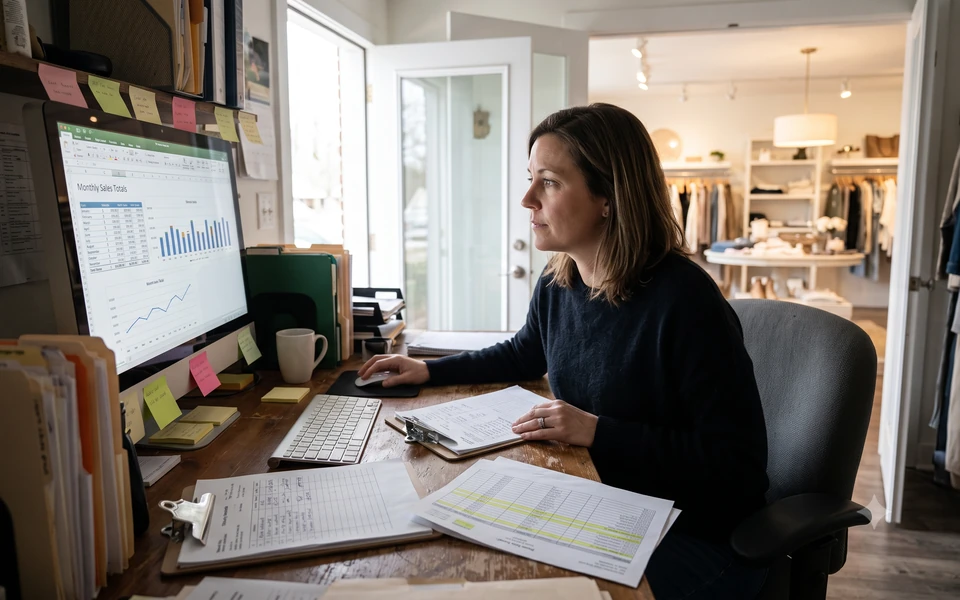
A single result shows that something changed.
Useful as a starting point—but not yet an explanation.
Questions that help you investigate, not conclusions to jump to.
The number shows you where to look. The information behind it may help you understand what to try next.
This applies far beyond business.
A small business owner may have years of sales records but never have compared them with seasonal demand. A service provider may repeatedly face customer complaints without noticing that they concern the same part of the service. A team may miss deadlines again and again without connecting those delays to the same recurring obstacle. A student may score poorly in a subject without understanding which part of the learning process needs more attention.
In each case, the information already exists. The opportunity is to look at it differently.
Instead of looking at every number separately, we can begin connecting the pieces, comparing what has changed, and asking better questions. Sometimes the result may be a small discovery. Sometimes it may reveal an opportunity worth exploring.
A simple way to think about the next step:
Notice what changed → Find out what might be happening → Try something different → See if it helps.
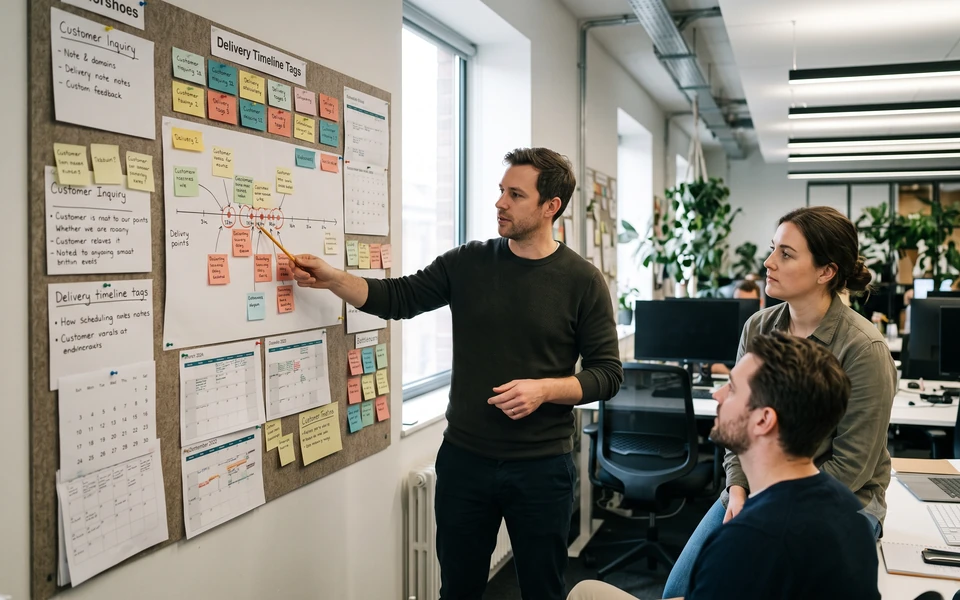
Consider a student who receives lower marks in mathematics.
The score tells us how the student performed in that assessment. But it doesn’t necessarily tell us what the student needs to improve.
Perhaps a concept isn’t clear. Perhaps the student understands it but struggles to apply it to unfamiliar questions. Perhaps a particular type of problem needs more practice. These are possibilities to explore—not automatic answers.
By looking at the answers, previous attempts, and the kinds of mistakes that recur, a student, parent, or teacher may begin to understand where help is needed.
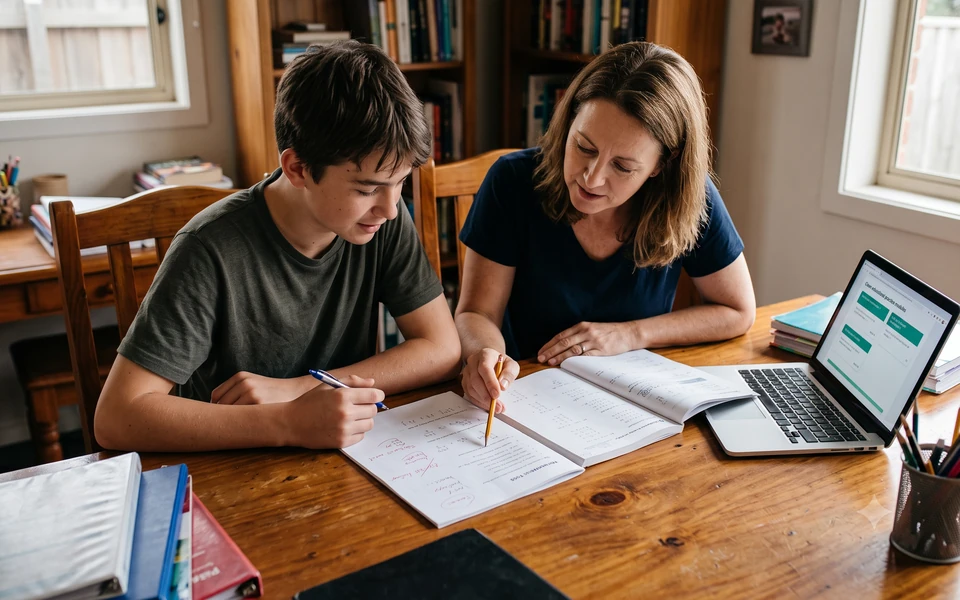
Is the difficulty with the idea itself, or with applying it in a longer problem? Start by forming a careful guess—not by labelling the learner.
Instead of repeating a whole chapter, try something smaller: revisit one concept, work through one example, or practise one type of question.
The next attempt gives more information. You can see what seems to be helping and what may need a different approach. One better result does not prove the problem is permanently solved.
The marks still matter. But they become more useful when we understand the story behind them. And the same idea applies to a shop, a business, a team, or a personal goal.
Today, information doesn’t have to remain confined to a notebook, spreadsheet, or report.
With clearer organisation—and, when useful, suitable tools—it can become easier to spot patterns, compare changes, and explore possible explanations.
Intelligent tools can help bring relevant information together, highlight things you may have missed, and suggest questions or actions worth considering.
You remain in control. You decide what matters, whether a suggestion makes sense, and what action to take.
The value isn’t in having another dashboard or generating another report. It is in spending less time trying to piece everything together and more time making informed decisions.
You don’t need a complicated system to begin looking at your information differently.
You may not find the answer immediately. But you may discover a better question to ask, a problem worth investigating, or a small change worth trying. That is progress.
As your questions become clearer, you can explore better ways to organise your information and tools that help you make more of it.
You may discover that the answer wasn’t hidden in some new source of data. It was waiting in the information you already had, viewed from a different angle.
Your data is more than a collection of numbers. It could be the beginning of a better question, a new discovery, or a smarter way forward.
The information you already have can be the beginning of a clearer decision and a smarter way forward.